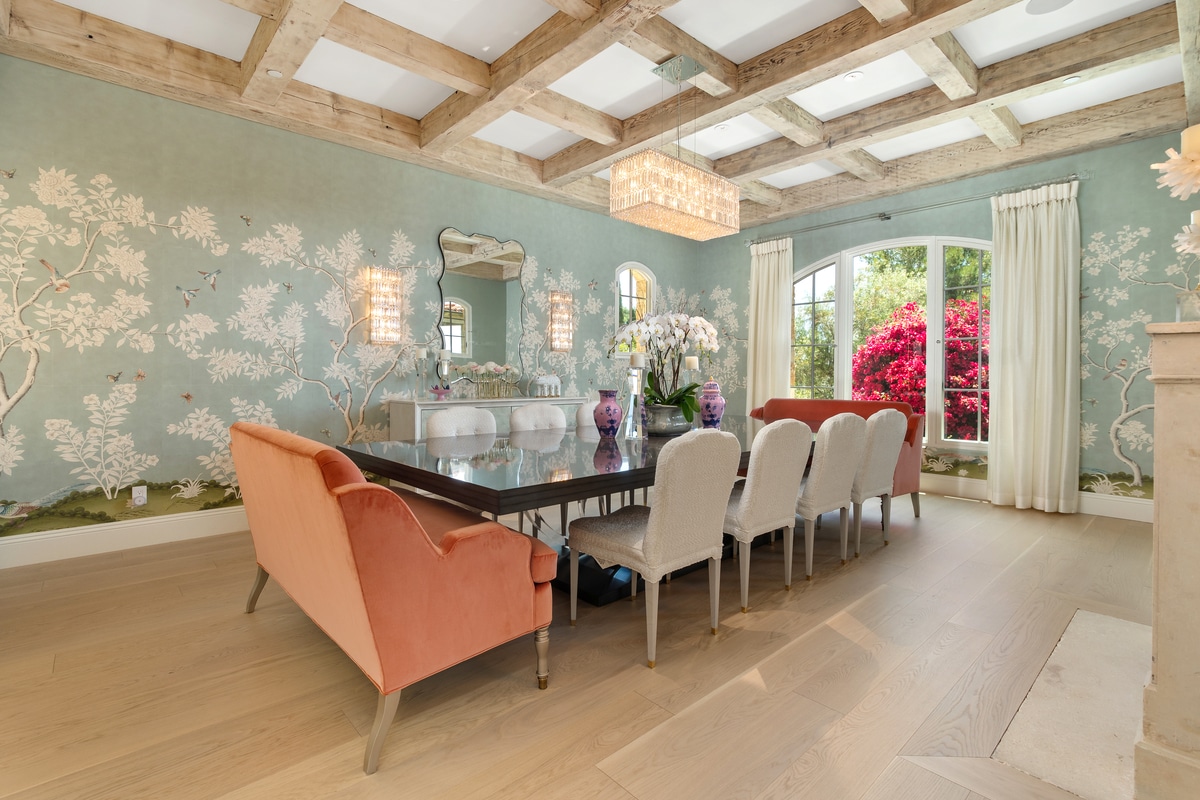
For years, open-concept living meant one giant room and a very hopeful sectional. In practice, that often translated to echoey spaces, floating furniture, and a kitchen island doing all the heavy lifting.
In modern home decor 2025, the open plan finally grows up. Instead of one big undefined box, you get a series of deliberately zoned spaces—places to cook, lounge, dine, work, and slip outside—stitched together by a cohesive palette, tailored furniture, and carefully planned circulation. The square footage hasn’t changed; the way it’s organized has.
Think of it less as “knocking down walls” and more as orchestrating moments: a sofa that frames a view and divides the great room, a scullery that quietly absorbs chaos, a terrace that reads like another room, and lighting and shades that help everything shift from morning to evening with almost no effort.
Why Open Plans Are Changing
Open-concept homes originally promised flexibility and togetherness. What they often delivered was:
- A great room where TV, fireplace, and view all competed
- Furniture pushed to the edges because nothing felt “anchored”
- Loud acoustics and glare during the day
- Kitchens that looked permanently “in progress” because there was nowhere to hide the mess
By 2025, modern interiors are solving these problems with smarter layouts and better zoning:
- Clear circulation paths that curve around seating, not through it
- Built-in storage that catches everyday clutter before it hits counters
- Floating furniture placed with precision, scaled to the room
- Indoor–outdoor continuity where the terrace feels like an extension of the living area, not a separate world
The new open concept still feels spacious and connected—but with enough structure that each zone has its own purpose and sense of comfort.
Zoning With Furniture: One Room, Many Roles
In modern open plans, furniture isn’t just “stuff in a big space”; it’s the primary tool for defining where one activity ends and another begins.
Float the sofa, don’t hug the walls
Instead of pushing everything out to the perimeter, designers now:
- Float the primary sofa in the room, often with a slim console or low cabinet behind it
- Use the back of the sofa to gently separate the living zone from dining or kitchen
- Keep 42–48 inches for the main paths so people can move comfortably even when someone is seated
A floated sofa and generous rug instantly create a living room within the great room, giving the eye something to organize around.
Use rugs as “area maps”
Rugs are quiet zoning tools:
- A large, hand-knotted rug under the main seating group defines the conversation zone
- A second rug anchors the dining table, even if it’s just a few feet away
- A smaller rug can mark a reading nook or work corner, signaling a distinct purpose without adding walls
As long as rug palettes coordinate, they make the space feel organized and intentional, not chopped up.
Choose pieces that respect circulation
Each major piece should answer two questions: Who sits here? and How do people walk around it?
- In tighter rooms, shallower sofas or curved sectionals prevent walkways from feeling pinched
- Round or racetrack coffee tables ease movement around corners
- Armless or low-backed chairs near key paths prevent visual and physical blockage
The result is a room where you never have to say “excuse me” just to cross it.
Custom Millwork as Architecture: Sculleries, Media Walls, and Drop Zones
Minimal, modern decor only works if there’s somewhere for real life to go. That’s where custom cabinetry and built-ins come in—they act like flexible walls, creating separation and storage without closing anything off.
The scullery: open kitchen’s secret helper
In many 2025 layouts, the “public” kitchen is backed by a scullery or working pantry:
- A compact space tucked behind or beside the main kitchen
- Houses the second sink, dishwasher, small appliances, and bulk storage
- Keeps countertops in the open-plan kitchen relatively clean, even in the middle of cooking
From the living room, you see a calm island and tidy perimeter. The real work happens just out of frame.
Media walls that actually disappear
The TV no longer dominates the open-plan living room:
- Full-height media walls integrate the TV into paneling, shelving, and storage
- Sliding panels, pocketing doors, or sculpted millwork can conceal the screen when it’s not in use
- Vented compartments hide components and cables, allowing the wall to read as clean architecture
When the TV is off, the room still feels designed around people and views, not hardware.
Entry and “drop” zones that protect the great room
To keep open spaces from becoming landing zones:
- Built-in benches and cabinets near the entry catch shoes, bags, and mail
- A slim console with drawers between front door and living area prevents clutter from spilling into the great room
- A pocket office or millwork niche absorbs laptops, chargers, and paperwork
These small interventions keep the open plan from looking like the inside of a suitcase by Wednesday.
Modern Home Decor 2025 Meets Indoor–Outdoor Living
A big part of modern home decor 2025 is how easily interiors connect to patios, decks, and gardens. Instead of treating outside areas as extras, designers plan them as full-fledged rooms.
Extend the floor plane
Visual continuity starts at your feet:
- Use similar tones indoors and out—oak or light wood inside, a coordinating stone or porcelain outside
- Keep thresholds as flush as possible, minimizing tripping points and visual breaks
- Align grout joints and plank directions when you can, so the interior and exterior read as one continuous field
This makes a terrace feel less like an “add-on” and more like a true extension of the living space.
Mirror the scale of interior furniture
Outdoor furniture is no longer an afterthought:
- Sectionals and chairs on the terrace echo the scale and comfort of interior seating
- Outdoor coffee tables and side tables are sized to really use, not just to hold a single lantern
- Dining tables outside often match or exceed indoor table length, reinforcing the idea of a second entertaining zone
When indoor and outdoor pieces feel related—through scale, silhouette, or material—the transition from sofa to sun lounger feels effortless.
Frame and filter light, don’t fight it
Large openings bring in stunning light—and serious glare if unmanaged:
- Motorized shades on big sliders soften light and control heat during the day
- Sheer or light-filtering fabrics preserve views while protecting furniture and floors
- Drapery panels on the interior side add softness, improve acoustics, and visually frame the view like a piece of art
The aim is to enjoy the view at noon without needing sunglasses in your own living room.
Lighting and Shades: One Plan, Many Moods
Open-concept layouts are unforgiving if lighting is an afterthought. In 2025, the most successful modern homes use layered lighting and scene control across the entire great room.
Think in scenes, not switches
Instead of a wall full of toggles:
- Designers program simple, intuitive scenes: Morning, Evening, Entertain, Movie, All Off
- Each scene adjusts multiple zones—kitchen, dining, living, and outdoor—at once
- The same keypad can also trigger shades to lower or raise with the lighting
It’s technology, but it feels human: one tap, and the whole space shifts to match the moment.
Place light for how you live, not in perfect grids
The days of evenly spaced “can light constellations” are fading:
- Ambient light may come from recessed fixtures with regressed trims, pendants, or concealed coves
- Task lighting is placed exactly where it’s needed: over islands, by reading chairs, near art or shelving
- Accent lighting grazes walls of plaster, stone, or paneling, adding depth at night without adding visual clutter
The overall effect is calm and dimensional, not flat and over-bright.
Shades that behave like part of the architecture
Shades and drapery are integrated early, not added on at the end:
- Shade pockets in the ceiling let rollers disappear completely when open
- Stack-backs for drapery are planned so fabric clears glass and doesn’t choke views
- Shade groups are tied into lighting scenes, so “Evening” might mean lights dim and sliders softly filter the sunset
Instead of being a tangle of cords and brackets, sun control becomes part of the design language.
Materials and Color: One Palette Across the Volume
Finally, the glue that holds open-concept modern decor together is a disciplined material and color palette.
Fewer materials, better quality
Rather than mixing many surfaces, designers choose a small, cohesive set:
- One primary wood (often rift-cut oak, ash, or walnut) used for floors and major built-ins
- One or two key stones, usually honed or leathered to avoid glare
- One dominant metal family—brass/bronze or nickel/steel—with perhaps one accent finish
Repeating these materials in both kitchen and living areas creates calm continuity, even when each zone has its own personality.
Textural neutrals with one confident accent
Color in modern home decor 2025 tends to be soft and layered, not loud:
- Walls, large upholstery, and rugs sit in a family of warms or cools—think sand, clay, chalk, or gentle greys and greens
- A single accent color—deep green, inky blue, rust—might appear on a pair of chairs, a rug, or a focal piece of art
- Patterns are subtle and often tone-on-tone; texture does most of the work
The open plan benefits from this restraint: your eye can travel comfortably from one end of the space to the other without hitting visual speed bumps.
Putting It All Together
At its best, modern home decor 2025 isn’t about filling a big room; it’s about composing a sequence of experiences within a shared volume:
- Furniture floats to define zones instead of lining the walls
- Custom millwork and sculleries keep clutter out of sight so “minimal” is realistic, not performative
- Terraces read as true rooms, aligned in floor level, furniture scale, and palette
- Lighting and shades are treated as one integrated system across kitchen, dining, and living
- A restrained mix of materials and colors pulls everything together
The overall effect is a home that feels open but not exposed, minimal but not cold, and generous without wasting a single square foot—a place where you can move from cooking to conversation to lounging outdoors in a few steps, with the design seamlessly supporting every moment.
Interior Design Articles