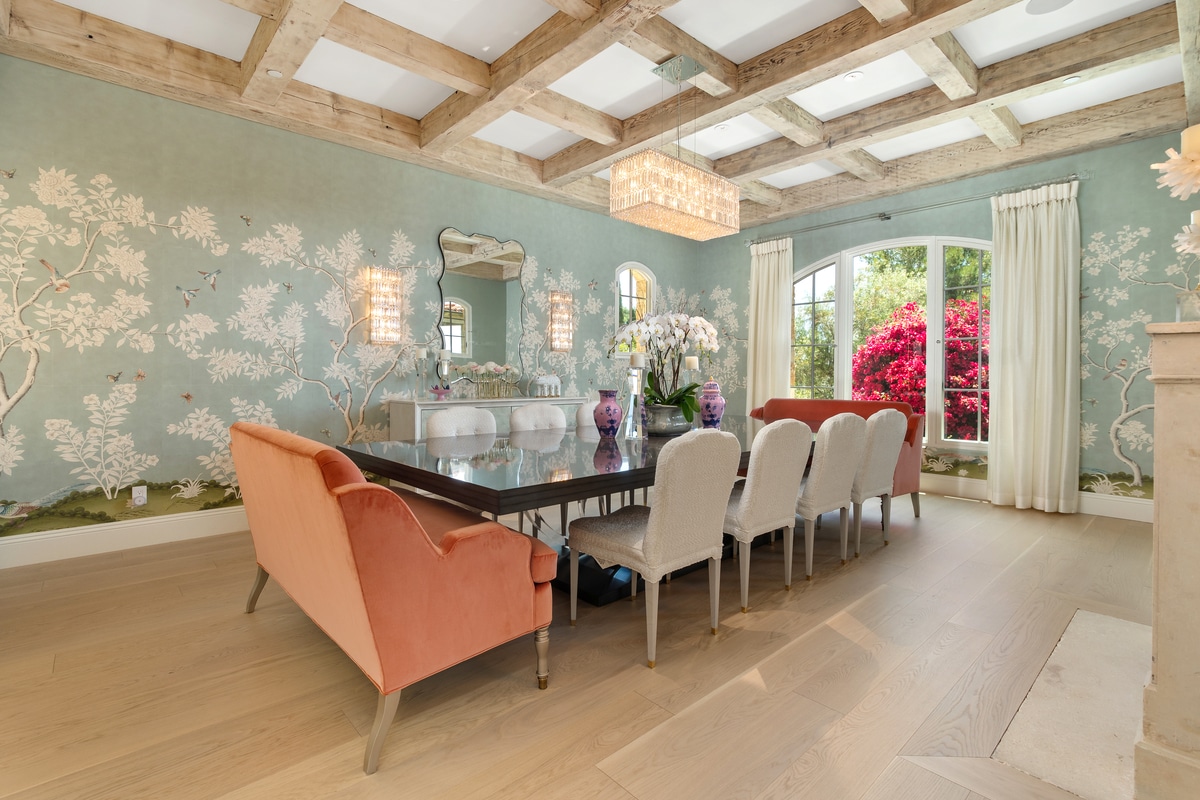
Where elevated aesthetics meet livable luxury in the heart of the home
The modern living room has evolved beyond a formal sitting area or entertainment hub—it’s now a space for gathering, relaxing, and expressing personal style. Today’s most compelling interiors strike a delicate balance: they’re visually refined, yet deeply comfortable. And for luxury homeowners, that duality is essential.
In this post, we explore living room design trends examples that show how top designers are creating rooms that are both beautiful and livable. These spaces reflect an effortless sophistication while remaining grounded in everyday functionality. The result? Rooms that invite you to linger—and leave a lasting impression.
Layered Textures Over Loud Patterns
One of the most defining shifts in high-end living room design is a move away from busy prints toward layered, tactile textures. Rather than rely on bold patterns to make a statement, designers are introducing visual richness through natural fibers, soft finishes, and contrast in materials.
In one Kern & Co. project, a tonal palette of soft taupe and ivory was elevated with mohair upholstery, boucle accent chairs, and a nubby wool rug—creating warmth without visual clutter. The effect was serene, inviting, and quietly luxurious.
This approach supports the trend toward spaces that feel curated, not decorated.
Low-Profile, Sculptural Seating
Comfort no longer means oversized or overstuffed. Designers are gravitating toward low-profile furniture with sculptural form, offering ergonomic support while allowing the architecture and layout to shine.
Curved sofas, deep lounges, and asymmetrical sectionals are just a few examples. These pieces often sit lower to the ground, creating a sense of openness and relaxation. Their fluid forms add visual interest without sacrificing comfort.
Paired with streamlined coffee tables or custom side pieces, the look feels modern yet timeless—ideal for clients seeking both style and substance.
Statement Lighting as a Centerpiece
Lighting is no longer a background detail. In luxury living rooms, statement lighting has emerged as a sculptural focal point, anchoring the space with drama and personality.
Whether it’s a cascading chandelier, an oversized pendant in burnished brass, or a geometric mobile-style fixture, these elements draw the eye upward and balance the room’s proportions.
Designers often layer this with ambient lighting from sconces, recessed LEDs, or floor lamps to enhance mood and functionality. It’s an artful mix of form and function.
Natural Materials That Reflect Place
Designers are leaning into organic materials that connect interiors with their surroundings. Think honed stone, warm wood, rattan, leather, and hand-plastered walls. These materials not only add depth—they develop character over time.
In California homes especially, these materials echo the landscape, reinforcing the sense of calm and authenticity. A limestone coffee table, white oak ceiling beams, or linen drapery can all bring subtle nods to nature into a polished space.
These living room design trends examples show how luxury is becoming less about sheen, and more about soul.
Curated Art and Collectibles
Rather than fill a room with accessories, high-end living room design is trending toward fewer, more meaningful pieces. Large-scale artwork, sculptural ceramics, or a singular antique accent create moments of impact without clutter.
In one example, a minimalist fireplace wall was elevated with a custom-framed vintage textile, complemented by a modern bronze sculpture on a pedestal nearby. The space felt curated, layered, and deeply personal.
This trend reflects a broader shift toward storytelling through design—where each item is chosen not just for beauty, but for relevance and resonance.
Multifunctional Layouts With Defined Zones
Today’s living rooms must adapt to varied needs: conversation, reading, entertaining, even remote work. Designers are addressing this with zoned layouts that maintain visual flow while offering distinct areas for different activities.
This might mean a cozy reading corner with a chaise and built-in shelves, or a floating desk nook that doubles as a bar. Rugs, lighting, and furniture placement all help define these zones without the need for walls.
This flexibility is especially important in open-concept homes, where design continuity and usability must go hand in hand.
In the world of high-end interiors, comfort and style are no longer competing goals. They coexist—elegantly—in spaces that are thoughtfully designed and deeply lived in.
These living room design trends examples show how the best designers are blending tactile richness, clean lines, and purposeful curation to create rooms that feel both luxurious and entirely your own. It’s not about following trends—it’s about setting a tone for how you want to live.
Interior Design Articles