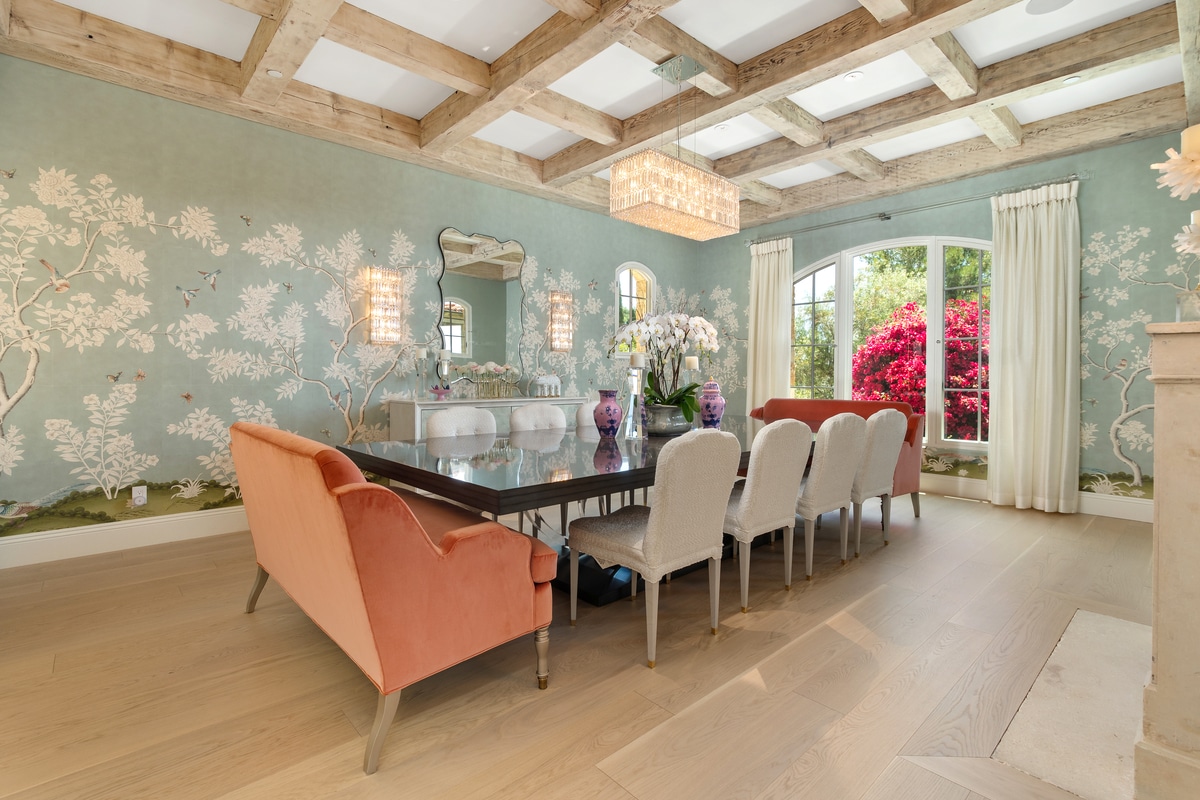
The nuanced art of styling in luxury interior design
In a well-designed home, it’s not just the architecture, materials, or furnishings that make a space feel elevated—it’s the final layer of styling that adds dimension, personality, and emotional tone. This is where accessory selection becomes essential.
More than decoration, accessories are the connective tissue of a room. They guide the eye, balance scale, soften lines, and introduce rhythm. In luxury interiors, their role isn’t to fill space, but to enhance it—through curated choices that feel both deliberate and effortless.
Here’s how thoughtful accessory selection brings harmony and depth to a room, completing the design without overwhelming it.
Balancing Visual Weight and Scale
Every room needs moments of rest and rhythm. Accessories help achieve that by filling negative space with intent—without adding clutter or visual noise. A sculptural bowl on a console, a stack of art books on a bench, or a single ceramic vessel on a shelf introduces volume and proportion where it’s needed.
Designers pay close attention to scale—not every accessory has to be large, but each must be in relationship to the space it inhabits. Too small and it gets lost; too large and it competes with architecture or furnishings.
The right accessory anchors without shouting.
Layering Materials and Textures
While major design elements—like furniture and built-ins—carry the foundation of a room’s palette, accessories introduce texture, contrast, and subtle tension.
A smooth stone object atop a rough-hewn wood table, a linen-covered box alongside aged brass candlesticks, or a matte ceramic sculpture against a lacquered backdrop—these pairings create a tactile richness that elevates the experience of a space.
This kind of layering helps rooms feel inviting and lived-in, without veering into over-styling.
Creating Movement Through Composition
Accessories guide the eye. Designers use them to establish visual movement and hierarchy, helping the viewer understand the spatial story of a room. This might be through a triangle of heights on a coffee table, a row of tonal objects on shelving, or a staggered arrangement of vessels on a mantel.
The goal isn’t symmetry—it’s intentional imbalance, which feels organic yet controlled. Accessories placed in thoughtful groupings draw attention, but never demand it. They encourage discovery, not distraction.
Reflecting Personality Without Overstatement
Luxury interiors are deeply personal, but never overly specific. Accessory selection allows space for subtle identity—through travel finds, collected books, family heirlooms, or commissioned pieces.
In a Kern & Co. project, a neutral-toned living room came to life with a single antique sculpture sourced by the client, paired with hand-glazed ceramics chosen for their organic form and tonal variation. The accessories didn’t dominate the space—but they made it theirs.
That’s the beauty of curated accessories: they reflect character without breaking cohesion.
Providing Softness and Sense of Completion
Some rooms risk feeling unfinished even when all the major elements are in place. Accessories add that final layer of softness and depth—a tactile throw, a textural pillow, a small vessel on a bedside table—that brings balance and intimacy.
Designers often use accessories to quietly punctuate the architecture. An object on a plinth, a sculptural lamp beside a window, or a stone tray on a vanity—all of these details reinforce the sense that the space is whole.
When done right, the accessories feel as though they were always meant to be there.
Styling With Intention, Not Excess
In high-end design, restraint is key. Accessory selection isn’t about adding more—it’s about adding meaning. The most sophisticated rooms are not over-accessorized; they are carefully edited, with each object chosen for its form, material, or relevance to the home’s aesthetic language.
It’s this restraint that allows accessories to breathe—to become moments of interest, rather than distractions. The result is a room that feels calm, grounded, and entirely resolved.
In the hands of a skilled designer, accessory selection becomes more than styling. It becomes a quiet composition of shape, texture, and tone—layered into a space with care, clarity, and a deep understanding of the room’s architecture and purpose.
It’s the difference between a space that’s finished and one that’s complete.
Interior Design Articles