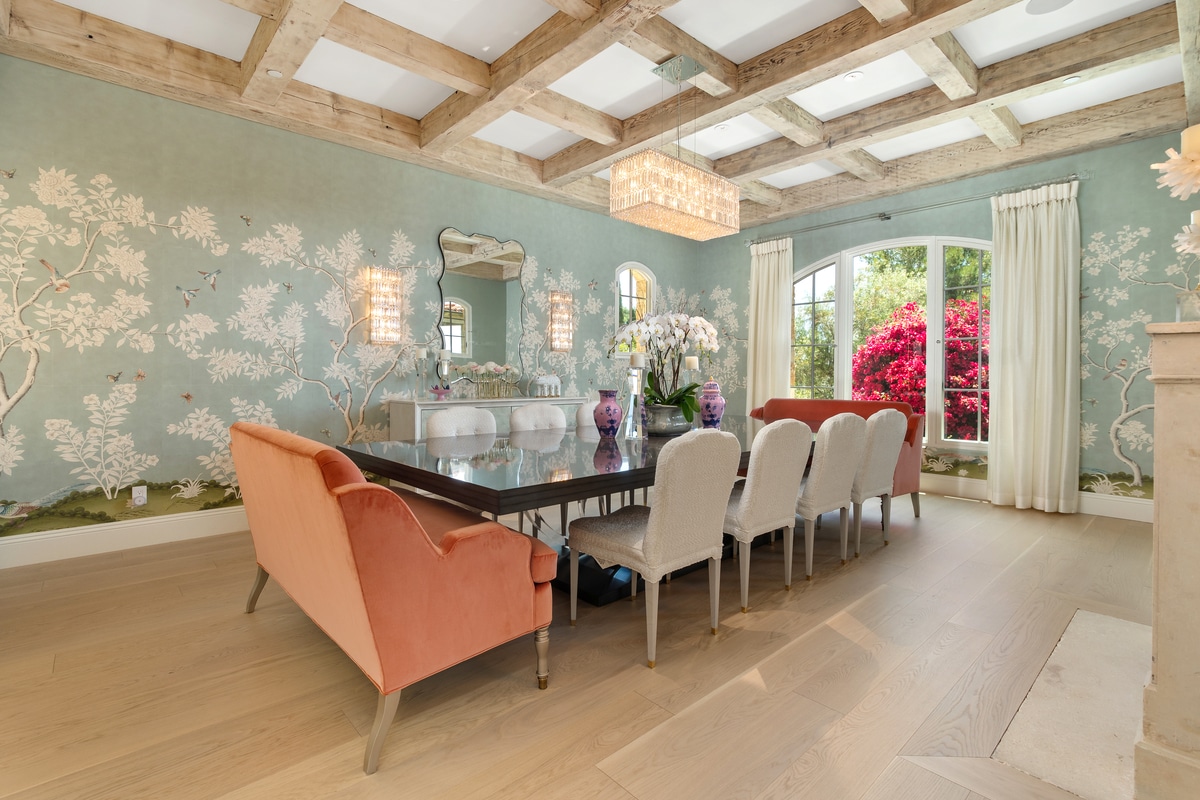
In luxury interiors, lighting does more than illuminate—it defines the atmosphere. Thoughtful fixed lighting design balances function with feeling, setting the tone for how a space lives and breathes. Whether casting a soft evening glow across a coastal kitchen or spotlighting architectural details in a formal living room, light becomes a design material all its own.
At Kern & Co., we approach fixed lighting as foundational to every project. It guides movement, shapes mood, and highlights the design narrative of each home.
What Is Fixed Lighting?
Fixed lighting refers to lighting elements permanently installed in walls, ceilings, or architectural features. Unlike portable lamps, these fixtures become part of the structure:
- Recessed lighting (can lights)
- Pendants and chandeliers
- Wall sconces
- Cove or under-cabinet lighting
- Track or rail lighting
These systems offer consistency, coverage, and control—particularly when layered intentionally throughout a space.
The Three Layers of Fixed Lighting Design
1. Ambient Lighting: The Foundation
This is your base layer. Ambient lighting ensures a room is evenly lit and visually balanced.
- Examples: recessed ceiling lights, flush-mount fixtures, large chandeliers
- Purpose: visibility, openness, spatial flow
- Design tip: In larger homes, use dimmable recessed lighting with soft white bulbs for flexible ambiance.
2. Task Lighting: Function with Precision
Task lighting supports activities that require focus—cooking, reading, grooming, or working.
- Examples: under-cabinet lights in kitchens, vanity sconces in baths, pendant lights over islands
- Purpose: clarity and efficiency without harsh glare
- Design tip: Position task lights close to work areas and layer with ambient to prevent contrast.
3. Accent Lighting: Curating Atmosphere
Accent lighting adds drama and dimension, drawing attention to features, textures, or art.
- Examples: picture lights, toe-kick LED strips, directional spotlights, lit coves
- Purpose: highlight and sculpt design elements
- Design tip: Use accent lights to define zones in open-plan layouts or create a sense of intimacy.
Designing for Luxury and Lifestyle
High-end lighting design considers not only aesthetics but also how the client lives. Key principles include:
- Zoning: Fixed lighting can visually separate areas in open-concept spaces.
- Control: Layered lighting requires layered controls—dimmers, smart switches, or automated scenes.
- Scale: Oversized fixtures can make a statement; minimalist options support quiet elegance.
- Warmth: Choosing the right color temperature (typically 2700K–3000K for residential) affects both mood and material perception.
In coastal homes, soft reflective surfaces paired with layered lighting enhance natural rhythms and architectural flow.
Material, Texture & Finish: The Designer’s Lens
Lighting fixtures are design elements themselves. At Kern & Co., we select:
- Bronze and aged brass finishes for depth and warmth
- Glass and alabaster for soft diffusion
- Linear LED profiles for invisible impact
The finish of the fixture matters as much as the light it casts. We treat lighting as sculpture—functional, yet expressive.
Lighting That Lives With You
Fixed lighting, when thoughtfully layered, doesn’t just light a space—it transforms it. From the glow that welcomes guests to the soft halo around a treasured art piece, it tells a story of intentional living.
At Kern & Co., we integrate lighting from the earliest design stages, ensuring it elevates every surface, shade, and moment within your home. Because in the best interiors, light doesn’t follow design—it leads it.
Interior Design Articles